Loading…
Serving Colton, CA and surrounding areas. (909) 679-6575
Patio cover, room addition, or new structure? We pour concrete footings in Colton designed for expansive soil and seismic requirements - with permits and city inspections handled for you.
Concrete footings in Colton are the underground base that supports everything built above them - most residential jobs take one to three days of active work, with a curing period of at least seven days before framing begins and a permit inspection that happens before the pour so the city verifies rebar placement and depth while it can still be seen. Colton Concrete Company handles the permit application, coordinates the city inspection, and sizes every footing for local soil and seismic conditions from the start.
If you are planning a patio cover, room addition, detached garage, or any structure attached to or near your home in Colton, the footing is not a detail you can improvise. The city will require it to be inspected before it is buried, and the soil in much of Colton - a clay-heavy mix that shifts significantly between wet winters and dry summers - means a footing that is undersized for local conditions will move with the ground rather than stay fixed. Many homeowners adding an outdoor structure in the same project window also need foundation installation work if they are tying into an existing slab or building a new one alongside the footing.
A footing built correctly in Colton is invisible once the project is done - you should never have to think about it again. But a footing that was undersized, poorly reinforced, or poured without an inspection becomes very visible when the structure above it starts to shift, crack, or separate from the house.
When the ground beneath a structure shifts - which happens regularly in Colton due to clay soil expanding and contracting with the seasons - the footing underneath can move unevenly. That uneven movement often shows up first as diagonal cracks spreading from the corners of door frames or window frames. If you are seeing this pattern in more than one spot, the footing below may have shifted.
A door that suddenly sticks, drags along the floor, or will not latch properly is often a sign that the frame around it has shifted slightly. In Colton, this kind of movement is frequently tied to soil movement beneath the footing rather than a problem with the door itself. If the issue appeared gradually over a season or after a wet winter, soil-related footing movement is a likely cause.
A patio cover or pergola that has started to lean, pull away from the house, or show cracks at the post bases is telling you its footings are no longer doing their job. Posts set in shallow or undersized footings are especially vulnerable to the soil movement that comes with Colton's wet-dry cycle each year. This is a safety issue, not just a cosmetic one - a leaning structure can come down in a strong wind.
If you want to build a patio cover, room addition, detached garage, or even a substantial fence, you almost certainly need a concrete footing before any framing begins. In Colton, the city requires a permit and inspection for most of these projects. Starting without a proper footing is not just a code violation - it is a structural risk that can result in the work being torn out and redone at your expense.
We pour concrete footings for patio covers, room additions, detached garages, fences, retaining wall bases, and accessory structures throughout Colton and the surrounding Inland Empire. The process starts with an on-site visit to assess the soil conditions at your specific location, measure the project area, and understand what load the footing needs to carry. Permits from the City of Colton are required for most structural footing work, and we pull the permit and coordinate the city inspection so you do not have to manage that process yourself. California's seismic requirements apply to all structural concrete work in this region, and we build every footing with the reinforcement needed for the Inland Empire's fault proximity. For projects where the footing connects to a larger concrete structure, our foundation installation service handles the broader scope when needed.
Older homes in Colton - and there are many that were built in the 1950s through the 1980s - sometimes need footing extensions or reinforcement when new structures are tied into existing foundations. We assess what is already in the ground before recommending any additional scope, so you only pay for what the project actually requires. For homeowners who are planning both a footing and a larger concrete flatwork project at the same time, combining the work with foundation raising can address structural leveling concerns in the same project window. The American Concrete Institute and the 811 Call Before You Dig program are both standards we follow on every project - no digging begins until utilities are marked.
Best for patio covers, covered walkways, and room additions that run along a wall line - a solid base for linear framing loads.
Suited for individual post bases - patio covers, pergolas, carports, or fence corner posts that carry a concentrated point load.
For Colton homes built in the 1950s through 1980s where new construction ties into older footings that need to be assessed or extended before new framing begins.
Two conditions in Colton make footing work more demanding than a generic spec can handle. The first is soil. Much of Colton sits on clay-heavy ground that swells when winter rains arrive and contracts again as it dries out in summer. A footing that is not designed wide enough and deep enough for that movement will eventually tilt or crack - and so will everything built on top of it. The second is seismic exposure. Colton sits near the San Jacinto Fault, one of the more active fault systems in California. State building standards for this region require more steel reinforcement and specific placement patterns in structural concrete work compared to lower-risk areas - this is not optional, and contractors working here should already be building to these requirements without being asked. Permitting through the City of Colton's Building and Safety Division ensures an inspector verifies both conditions - soil-appropriate sizing and seismic reinforcement - before the concrete is poured and the work is buried.
We work on footing projects throughout Colton and into neighboring communities, including San Bernardino and Rialto, where similar soil and seismic conditions apply and where we have poured footings for patio covers, room additions, and accessory structures on homes from the same postwar housing era.
We reply within one business day and come out to look at the site in person before quoting anything. We assess the soil conditions, measure the area, and understand what the footing needs to carry - so the estimate we give you is based on your specific project, not a generic range.
You receive a written estimate that breaks down the dig, forms, rebar, pour, and permit fees separately. Once you approve, we file the permit application with the City of Colton. The city schedules an inspection before the pour - budget several business days to a week for this step before work begins.
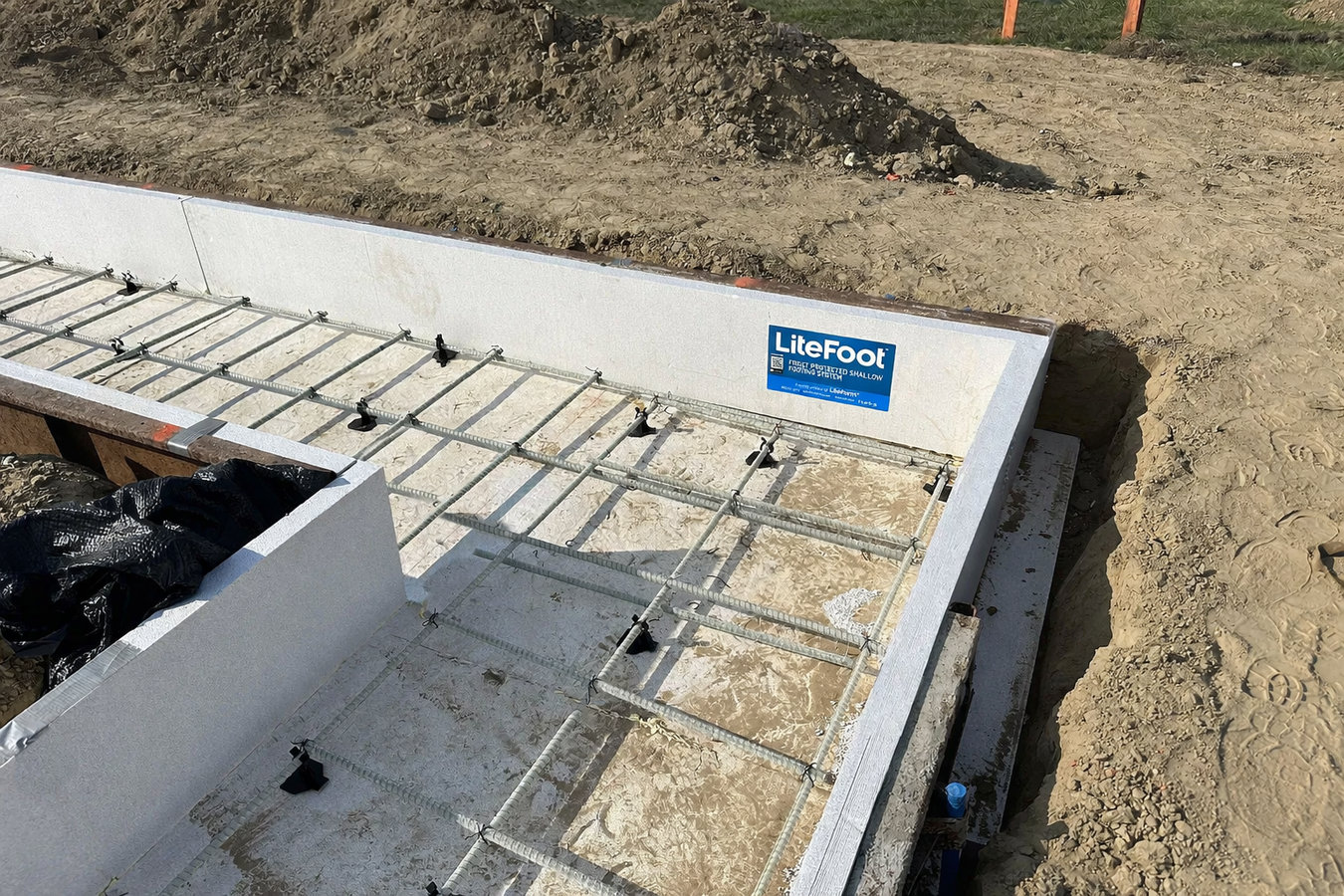
The crew digs the trench or holes to the required depth, sets up forms, and places the steel rebar inside. The city inspector visits at this stage to confirm depth, rebar layout, and form dimensions before approving the pour. Utilities are marked by 811 before any digging starts.
Once the inspection is passed, concrete is ordered and poured - typically early morning during hot months to protect curing quality. The footing needs at least seven days before framing begins. We walk the finished work with you before leaving and confirm when your next construction phase can start.
We come to your site, assess the soil, and give you a written estimate - no obligation, no sales pressure. Replies within one business day.
(909) 679-6575We pull the permit, coordinate the pre-pour inspection, and make sure the city signs off before we cover anything with concrete. That documentation protects you when you sell your home, apply for other permits, or need to verify the work was done correctly years later. Unpermitted footings cause real problems - we make sure yours is never in that position.
Colton's proximity to the San Jacinto Fault means California's seismic requirements apply to all structural footing work here. We build every footing with the rebar quantity and placement patterns required for this region - not the lighter spec you might see in a lower-risk area. You are paying for a structure that holds through the shaking, not just through normal use.
We look at the soil conditions at your specific location before pricing the work, because clay content varies across Colton neighborhoods and affects how wide and deep a footing needs to be. A footing sized for average conditions on a site with heavy clay will move with the ground within a few years. We build to the site, not to a template.
Colton Concrete Company works across 12 cities in San Bernardino and Riverside counties. That footprint means we bring consistent experience with the soil, climate, and permit processes of the region to every Colton job - not just general concrete knowledge applied to a city we do not know well.
A footing done right is invisible for decades - you build on it and forget it exists. That is the standard every footing project we complete in Colton is held to, from the soil assessment at the start to the city inspection before the pour.
When a slab or foundation has settled unevenly, foundation raising brings it back to level - often addressed alongside footing work on older Colton homes.
Learn moreFull foundation installation for new structures, ADUs, and additions - the broader scope that footings are part of when a complete base is needed.
Learn moreSummer schedules fill quickly in the Inland Empire - reach out now to lock in your start date and get a written estimate before the window closes.