Loading…
Serving Colton, CA and surrounding areas. (909) 679-6575
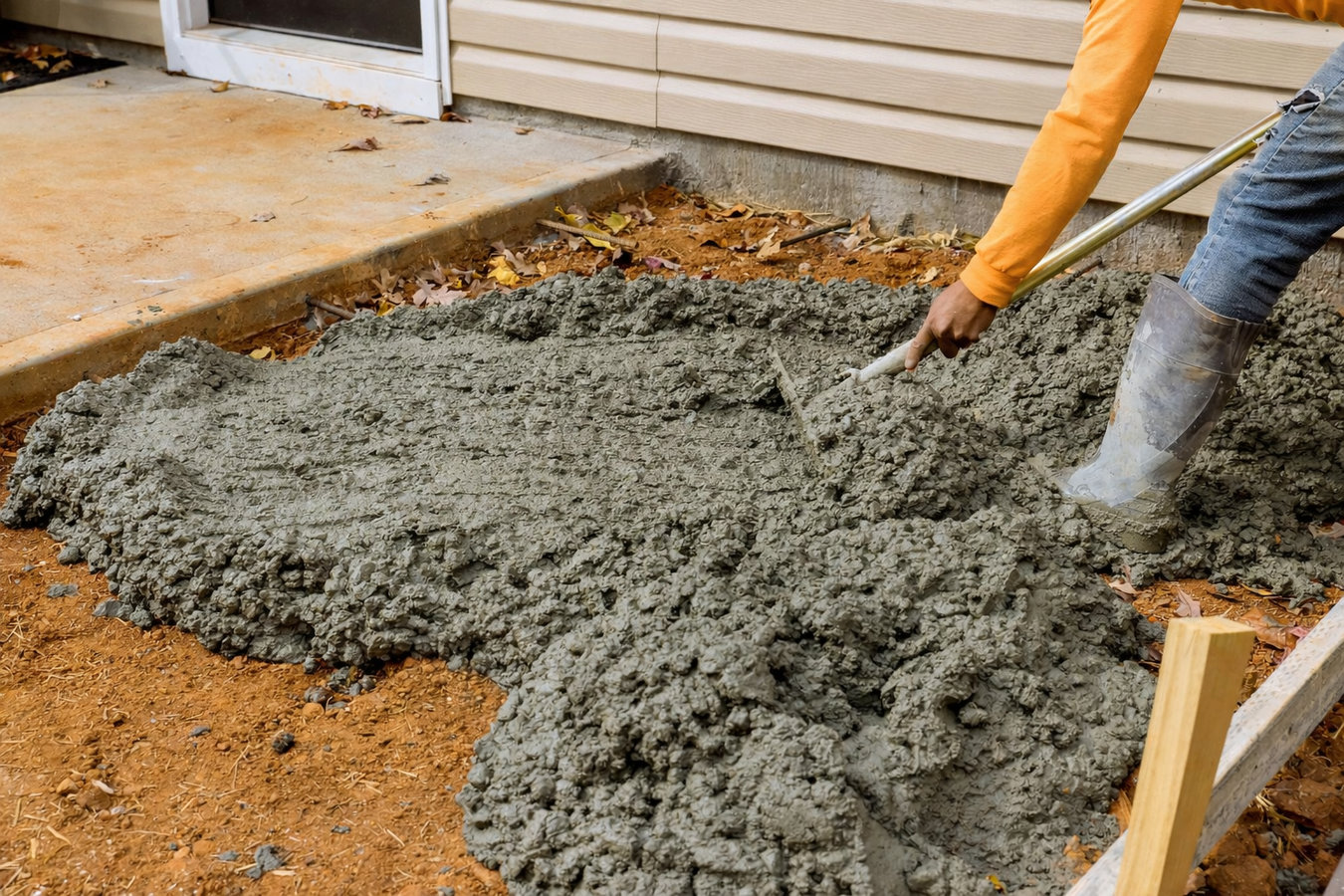
Settled concrete does not have to mean a full replacement. We lift sunken slabs in Colton back to level - most jobs are done in a single day, and you can walk on the surface within the hour.
Foundation raising in Colton lifts settled or sunken concrete slabs back to their original level position by pumping material underneath through small drilled holes - most residential jobs are completed in a single day, with the slab walkable within an hour of completion and drivable within 24 hours, at a fraction of the cost of full concrete replacement.
If your driveway has dropped, your garage floor has a visible low spot, or your patio no longer sits level, the problem is almost always the soil underneath - not the concrete itself. In Colton, the clay-heavy ground shifts with every wet season and dry season, which gradually creates voids under slabs that cause them to sink. Foundation raising fills those voids and lifts the slab back up. Colton Concrete Company handles every step, from the initial assessment through the permit check and the lifting work. For slabs that have settled because of underlying structural issues, we also offer slab foundation building when a replacement or new pour makes more sense than lifting.
Most homeowners who call us have been watching a crack or a low spot get worse over time and want to know if lifting is still an option. In most cases, it is - and the sooner you address it, the less material it takes to fill the void and the simpler the job becomes.
When a slab shifts, the door and window frames shift with it. Even a small amount of movement can make a door that used to swing freely start dragging or refusing to latch. If you are noticing this in multiple spots around the house - especially after a dry summer or the first heavy rains - it is worth having someone look at the foundation rather than just adjusting the hardware.
When one side of a crack is visibly higher than the other, the soil underneath has shifted unevenly. In Colton, this kind of stepping is common on driveways, patios, and garage floors after a wet winter followed by a long dry season. It is also a trip hazard. A step that is growing - even slowly - means the void underneath is expanding, and lifting becomes more involved the longer you wait.
If water collects against your home's foundation after rain rather than draining away, you are accelerating the soil movement that causes settling. Colton's winter rains often arrive in concentrated bursts, and standing water against a slab works directly on the clay soil underneath. This is both a sign that settling may already be happening and a warning that it will get worse without a drainage fix.
Look at where your driveway meets the garage floor, or where a patio slab meets the house. A gap that was not there before - or one that has grown over the past few seasons - means the slab has dropped relative to the structure next to it. This is one of the clearest, most visible signs that the soil underneath has shifted and the slab needs evaluation.
We perform mudjacking and polyurethane foam injection for settled driveways, garage floors, patio slabs, pool decks, and walkways throughout Colton and the surrounding Inland Empire. The right method depends on the size and condition of the slab, how much it has dropped, and the soil conditions at your specific location. Mudjacking uses a cement-and-soil slurry pumped under the slab through small drilled holes - it has a decades-long track record and costs less upfront. Polyurethane foam injection uses an expanding foam that cures quickly and weighs far less, which is an advantage on Colton's clay-heavy soil where adding a heavy slurry can sometimes contribute to future movement. Both methods leave small patch holes that are filled flush with the surface before we leave. For homeowners whose slabs have settled too far for lifting to be effective, our slab foundation building service handles full replacement when needed.
Every foundation raising job in Colton starts with an on-site assessment where we look at the slab condition, measure how far it has dropped, and identify what is happening with the soil and drainage around it. We do not recommend lifting without looking closely at the concrete first - if the slab is crumbling or badly damaged, lifting may not hold and we will tell you that directly. We also check with the City of Colton's building department on every job to confirm whether a permit is needed before any work begins. Homeowners planning larger structural work alongside a raising project may also want to review concrete cutting for removing damaged sections prior to the lift. The Concrete Foundations Association sets the professional standards for foundation work that we follow on every project.
Best for larger slab areas where cost efficiency is the priority and the soil conditions are stable enough to support the added weight of the slurry.
Suited for Colton homes on clay-heavy soil where a lightweight, fast-curing material reduces the risk of future settling from added load.
Recommended alongside any lift - identifies whether water is being directed toward the foundation and contributing to the soil movement that caused the settling.
Colton sits in the San Bernardino Valley on soil that contains a significant proportion of expansive clay. That clay swells when it absorbs moisture during winter rains and shrinks back as it dries out through the long summer. That cycle - year after year - is the single most common reason slabs settle in this area. Many of Colton's homes were built between the 1940s and the 1970s and are sitting on original concrete that has been through decades of that soil movement. Homes near the BNSF rail corridor have also dealt with years of vibration from passing trains, which can gradually loosen the soil beneath slabs and widen existing voids. Foundation raising is often the most cost-effective way to address these issues without the disruption of a full tear-out and replacement. We work throughout the Colton area including neighborhoods served from Rialto to the west and San Bernardino to the north.
Colton also sits in a seismically active part of Southern California. Even minor earthquakes - the kind most residents barely feel - can shift soil and widen existing voids beneath slabs over time. If you noticed new settling or a growing gap after a recent seismic event, having a contractor inspect the slab is a reasonable precaution. The USGS Earthquake Hazards Program tracks ongoing seismic activity in the region and can help you understand the level of risk in your specific part of Colton. Addressing existing voids now - before the next significant shake - keeps a manageable problem from becoming a major repair.
When you call, we ask a few basic questions - what you are noticing, where the problem is, and roughly how old your home is. We will schedule an on-site visit before giving you any numbers. You are not committing to anything at this stage, and you will hear back within one business day to confirm your visit.
We walk the slab, measure how far it has dropped, and assess the soil and drainage situation around it. This visit typically takes 30 to 60 minutes. At the end you receive a clear, written estimate that breaks down the method, the scope, and the total cost - no estimates given over the phone without seeing the job.
Before scheduling work, we confirm with the City of Colton whether a permit is required for your specific project. If one is needed, we handle the application. For most exterior residential slab jobs, permits are not required - but we check every time so there are no surprises after the work is done.
We drill small holes through the slab, pump material underneath until it rises back to level, and patch the holes flush with the surface. Most residential jobs take two to six hours. We clean up the work area before leaving, and you can walk on the slab within an hour - drive on it within 24 hours for mudjacking or sooner with foam injection.
We come out, look at the slab in person, and give you a clear written number before any work begins. No pressure, no obligation.
(909) 679-6575We have assessed and lifted slabs across Colton and the surrounding Inland Empire, and we understand how the region's clay-heavy soils behave through wet winters and dry summers. That local knowledge shapes how we size the lift and whether we recommend drainage work alongside it - because a lift that does not account for soil conditions will need to be repeated.
We will tell you if your slab is not a good candidate for lifting. If the concrete is too damaged or the soil too unstable to make a lift hold, we say so and explain why replacement makes more sense. We would rather lose a smaller lifting job than have you call us back in six months with the same problem.
Some Colton homeowners have discovered after the fact that foundation work was done without required documentation - which can surface during a home sale or insurance claim. We check permit requirements with the City of Colton's building department before any job begins, so your work is always on record and properly documented.
We schedule foundation raising jobs to be completed in a single visit for most residential properties. You are not losing access to your driveway or patio for multiple days. For foam injection jobs, curing happens faster than mudjacking - some homeowners are driving on the surface the same afternoon.
Every one of our foundation raising jobs in Colton is backed by a California contractor license you can verify on the California Contractors State License Board website before you hire us. Local experience and proper licensing together mean you know exactly who is working on your home and that they are accountable to state standards.
Precise diamond-blade cuts to remove damaged slab sections before a lift or replacement - clean edges that make patching straightforward.
Learn moreFull slab pours for Colton properties where the existing concrete is too damaged to lift and a new pour is the right long-term solution.
Learn moreVoids under concrete grow over time. The sooner we assess it, the simpler and less costly the fix. Call or request a free estimate now.